
About the Medals
The challenge of improving the current economic system is immense and intricate. This work would benefit greatly from attention and contributions of the best and brightest around the world. In order to encourage and recognize attention to how actors in the economy (especially enterprises) may better integrate performance and progress, the Society, with the support of donors from around the world (see below), is establishing a set of "Progress Medals." The hope and hypothesis is that these medals will help attract and accelerate intellectual and practical attention to the moral dilemmas emergent in our modern economy. As this effort yields the elements—models, methods, and measures—of a more evolved and satisfactory paradigm, it can help us evolve curricula in business schools. In turn, business leaders and entrepreneurs may become more attuned to their roles and not only their goals. Gradually, this should influence practice and help bring about greater fairness and well-being in the economic system.
2025 Progress Medal Laureates
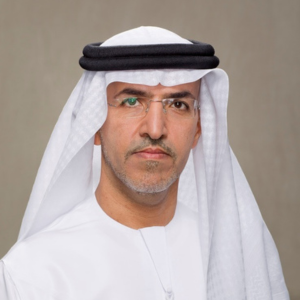
Dr. Mugheer Al Khaili
For pushing the frontiers of knowledge, policy, and practice on cohesive families and vibrant communities as primary platforms for enhancing well-being, demography, and inclusion, the Society awards a Progress Medal to Dr. Mugheer Al Khaili, member of the Executive Council and head of the Department of Community Development, Abu Dhabi.
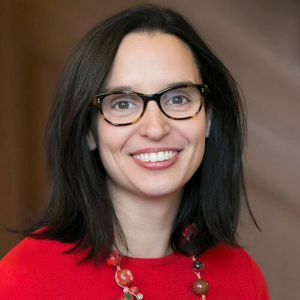
Julie Battilana
For pioneering research on hybrid organizing as a social technology integrating economic and moral logics, and for underscoring the intentional construction of a corresponding organizational identity, the Society awards a Progress Medal to Julie Battilana, a professor with joint appointments at the Harvard Business School and the Harvard Kennedy School in Massachusetts, USA.
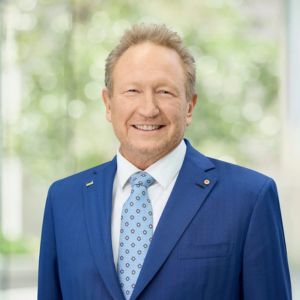
Dr. Andrew Forrest AO
For his daring and innovative commitment to defend and advance, from within the private enterprise system, the rights and interests of humans and nature, the Society awards a Progress Medal to Dr. Andrew Forrest, founder and executive chairman of Fortescue, a metals, energy, and technology group with major operations in Australia and elsewhere.
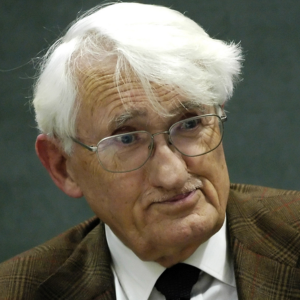
Jürgen Habermas
For codifying morality as a communicative process in which consultation, exchange, and understanding are fundamental acts that enable and legitimate collective choice and action, the Society awards a Progress Medal to Jürgen Habermas, the German philosopher and social theorist.
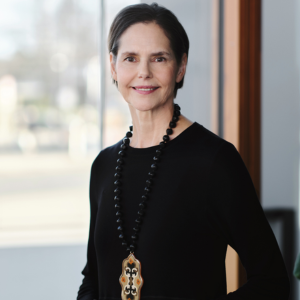
Johanna Mair
For pioneering research on social entrepreneurs as architectural innovators who advance well-being and sustainability by activating community, engaging democratically, and creating markets, the Society awards a Progress Medal to Johanna Mair, professor of organization and leadership at the Hertie School in Berlin, Germany.
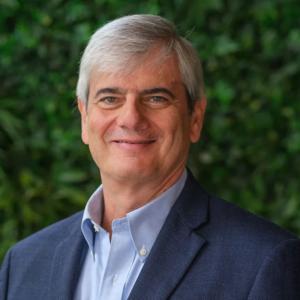
Ramón Mendiola
For pioneering a progressive practice of capitalism in which disparate stakeholders are mobilized collectively to better integrate people, planet, and profit and to thus reliably reconcile performance & progress, the Society awards a Progress Medal to Ramón Mendiola, CEO until recently of FIFCO, a leading producer of beverages and food, headquartered in Costa Rica.
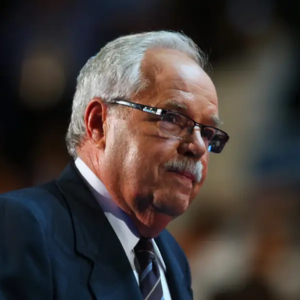
James D. Sinegal
For the steadfast caring, creativity, and courage to integrate, in a competitive sector, value for customers, well-being for employees, and wealth for shareholders, the Society awards a Progress Medal to James D. Sinegal, co-founder and former CEO of Costco Wholesale, a leading retailer in the USA.
2025 Medal Committee
The nomination and award committee was constituted of six members of the Society.

Medal Donors
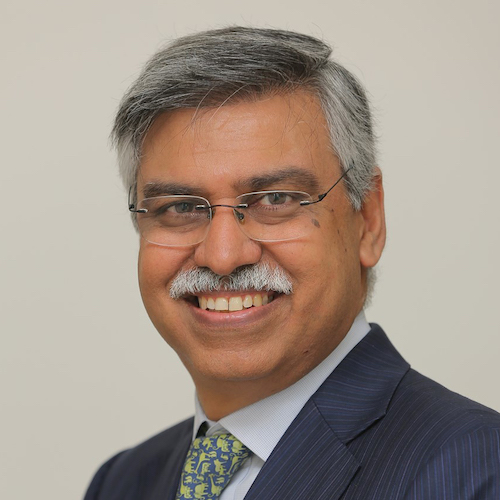
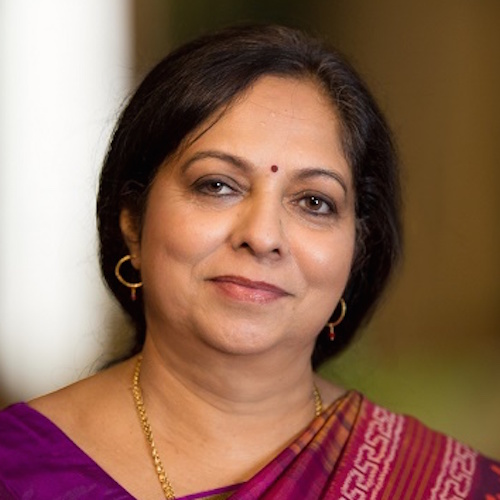
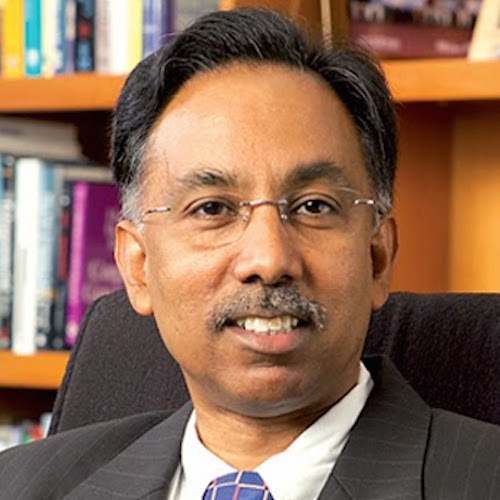
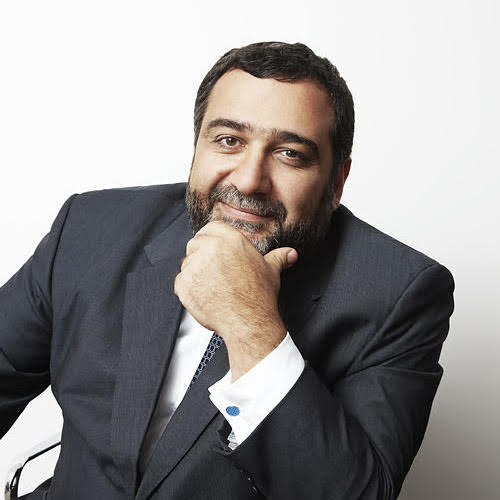
In keeping with the nature of the project and its global relevance, the medal donors are esteemed business leaders and entrepreneurs from around the world.


2025 Certificate and Painting Artists
Each Progress Medal laureate receives a binder holding a calligraphed certificate framed on the right of the binder, and a work of original art framed on the left. The calligraphy for the certificates was executed by Louise Jolly. The oil on paper original art, inspired by the forests of Fontainebleau, was painted by Reid Masselink.


More About the Medals
A set of medals awarded periodically for pioneering scholarship and leadership in developing the economic system to achieve greater fairness and well-being. Specifically, the Progress Medals aim to recognize intellectual and practical contributions that enable economic actors to better and more systematically integrate performance and progress.
Each contribution will be honored with a formal certificate, a gold medal, and, for scholars, a cash award of up to one hundred thousand U.S. dollars. Intellectual contributions may pertain to any of the various areas of scholarship including moral philosophy, moral psychology, and the traditional fields of business (economics; finance; accounting; strategy; entrepreneurship; marketing; operations research; decision science; production; information and data technology; psychology; sociology; leadership; and organization theory). Beyond honoring scholars, the Society may also award Progress Medals to business leaders, owners, or board members, who enable and exemplify creative, cogent, and courageous practice in integrating performance and progress.
Scholars and thinkers have long pondered the dilemmas related to our social and economic interdependence. The impressive stock of norms, theories, laws, and other institutions of peace (order) and prosperity (betterment) bear evidence to this. Civilized society and an industrialized economy are products of this long experimentation and contemplation.
In contrast, dilemmas related to our moral interdependence—among humans, between humans and nature, and between humans and the future—have received less sustained attention. From concerns on climate change and our ecological footprints to fairness to future generations, from declining share of labor in income to trade- and now technology-related job concerns, from contagious consumerism to growth that seems to elude real inclusion, from dissatisfaction with economic governance to declining trust in business and business leaders, we confront a variety of acute and chronic moral dilemmas.
These dilemmas are in nature less techno-economic and more moral- philosophical. They are less about decisions (that turn on payoffs) and more about choices (that turn on principles). They are not only about peace and prosperity but, primarily, about propriety (fairness). Without proper foundations in fairness, peace and prosperity are prone to remain tentative.
To be sure, Smith’s Theory of Moral Sentiments, Kant’s Groundwork of the Metaphysics of Morals, Polanyi’s Great Transformation, Rawls’ A Theory of Justice, and other pertinent works offer profound insights and relevant precepts. Yet, when it comes to capitalism, the foundations of fairness have been elided.
This matters, because, more and more around the world, enterprises allocate the vast majority of natural, financial, human, and social resources. In many parts of the world, enterprises attract the best talent. The economic realm has a significant (and perhaps disproportionate) influence on well-being. Last but not least, addressing this seems more vital now as the reach and adoption of the existing paradigm of capitalism is spreading east and south.
To be sure, at business schools worldwide there is a felt and growing need for rigorous treatment of concerns regarding the paradigm and practice of capitalism. At the moment the main stay includes case studies, readings and lectures on ethics, and a growing body of empirical work purporting to explore (and often show) the relationship between “doing well by doing good.” Understandably, much of the emphasis remains on making the “business case” for corporate social responsibility (CSR). While the current emphasis is on practice and how practice influences and is influenced by performance, there is not enough on progress and paradigm that is relevant and rigorous.
Business theory has developed in enlightening and useful ways by drawing on social science (economics, psychology, sociology, political science) and engineering (optimization, operations, planning). Existing theories address performance but they scantly address progress. As a result, curricula in schools and courses of business tend to dwell on performance. In the background is the hopeful assumption that well functioning markets will be self-correcting and induce a satisfactory overlap between private, public, and collective interests. As we learn each day, this assumption is less realistic than we would like it to be. The literature on externalities, market failures, and regulation is helpful but insufficient.
If we are to help evolve the paradigm of capitalism in a manner that better integrates market and society, humans and nature, and the present and the future, then we will need rigorous and practicable models, methods, and measures of integrating performance with progress. We will need to integrate perspectives and understanding from moral and social philosophy. We must re-examine the assumptions of modern microeconomics and markets, probe the basis and limits of modern rationality, and propose better adapted, more imaginative, and robust ideas that will constitute an integrating capitalism.
The work ahead can scarcely come from one mind or even a self-appointed college of intellectuals. This belief (in a distributed approach) is what underpins the idea of the Progress Medals. If these work as intended, then, over time but more rapidly than otherwise, we should be able to deepen and disseminate an evolved paradigm of a more integrating capitalism.
More than governments, enterprises are exposed to competition. As a consequence they tend to be more prone to experiment, learn, innovate, and change. By the same token enterprises operate not in isolation but with competitors and partners up and downstream. A better paradigm of an integrating capitalism will provide a coordinating influence that can rationally reduce individual enterprise’s concerns about the “sucker’s payoff” (obtained when a focal player cooperates but others defect). This approach to catalyzing adoption would seem superior to one that relies solely or primarily on regulation (especially given regulation’s drawbacks in terms of complexity, corruption, and cost).
Heterogeneity across sectors, firms, and time, imply that, ideally, the choices and decisions that must precede proper actions are probably optimally made in a decentralized manner. An evolved paradigm (with models, methods, and measure) can support this. In addition, if even proper actions are to not be regarded as entirely arbitrary (reflecting the preferences of those in position of enterprise authority and giving rise to familiar concerns of agency costs), they have to be justifiable in terms of publicly defensible standards. In these circumstances, models, methods, and measures (i.e., well-elaborated theories) of an integrating capitalism will help enterprises proceed less hesitantly from intentions to actions.
In sum, models, methods, measures are needed to constitute a better-adapted paradigm of an integrating capitalism and make it (i) suitable for decentralized adoption and adaptation, (ii) less arbitrary and more publicly justifiable, (iii) teachable; and, because of the preceding, (iv) scalable. To catalyze, recognize, and honor seminal and significant contributions oriented to this challenge is the intention and aspiration of the Progress Medals. This work will particularly stand to help emerging economies as they adopt market-oriented models of investment, production, exchange, and consumption.
The topics covered by the medals address all the main subjects and functions relevant to business and taught in business schools. Rather than teaching ethics as a standalone course and set of principles to be internalized by students and managers and applied wisely when suitable, it would seem more effective if we work to integrate philosophical principles directly into the various business subjects and their models of optima. This will bring us closer to an integrating capitalism in practice rather than just in principle. Also, if scholars in the core subjects were to explore business dilemmas from such a perspective, there is a higher probability of submission, publication, and discussion of an integrating capitalism in the mainstream academic journals. Further, the reason for including all these topics (and awarding several medals for intellectual contributions) is to recognize and embrace the principle of complementarity. That is, an integrating finance alone or an integrating strategy alone is unlikely to deliver the desired improvements. We will likely need evolution along multiple (if not all) functions if enterprises are to practice an integrating capitalism.
Eligible intellectual contributions will (i) propose a seminal and significant model, method, or measure (ii) that illuminates and addresses the dilemma of economic actors integrating performance and progress, and (iii) that has been published or accepted for publication in a journal or a book (including a chapter in an edited volume). Eligible scholars will tend to work in social science, philosophy, or, in principle, any other domain.
Eligibility for the leadership practice medal will (i) involve creative, cogent, and courageous action in integrating performance and progress that (ii) targets a significant moral dilemma in society, and (iii) that adapts one or more aspects of the mainstream of the organization (i.e., its business or product portfolio, human capital, operations, target customers, and such) in addressing that dilemma. (This is not about corporate philanthropy or community relations. As some leaders have correctly observed, this is less about how enterprises spend money, and more about how they make money.)
The Society is open to receiving nominations from any person or organization. The Society invites Fellows to submit and solicit nominations. For intellectual contributions, the Society may maintain contact with editors of academic journals and publishing houses in the relevant fields.
Nominations may be made at any time during the year. For practical reasons, there will be a cutoff date (that may vary from term to term) after which nominations coming in will be included for consideration during the subsequent term.
Mindful of not imposing excessive demands on the time and energy of the award committee, in any given term, and for each medal, no more than five candidate contributions will be presented for final consideration.
The Award Committee is constituted of a subset of the Fellows. The Society may request and reappoint Fellows for subsequent terms. The judgment of the committee once announced is final.